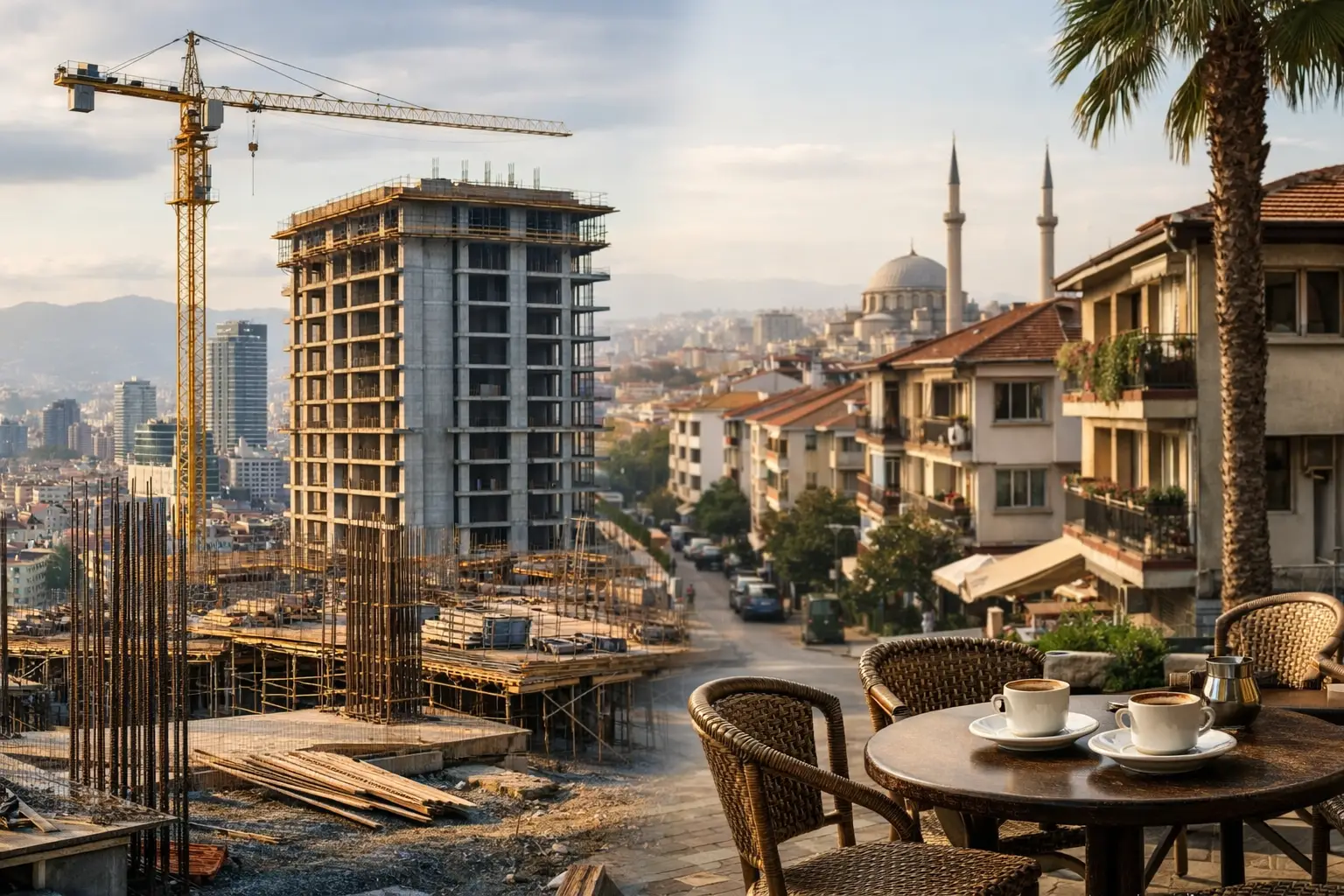
Those considering new construction versus existing property in Turkey are usually not facing a matter of taste, but rather a strategic decision. For buyers from Germany, Austria, and Switzerland, the focus is on capital preservation, legal clarity, predictable costs, and a property that aligns with their individual usage or investment strategy. This is precisely why a one-size-fits-all answer is rarely helpful.
A modern new build with up-to-date amenities can appear more appealing at first glance than an older apartment in a good location. At the same time, an existing property can be the better choice where location, immediate occupancy, and a realistic purchase price are more important than a pristine, brand-new property. Ultimately, what matters is not what's newer, but what suits your needs.
New construction or existing property in Turkey – what really matters
Anyone buying property in Turkey shouldn't consider it in isolation. The purchase is always a combination of factors: location, construction quality, documentation, management, exit potential, and personal time horizon. European buyers, in particular, often underestimate how significantly these factors influence their eventual satisfaction.
The question of "new construction or existing property in Türkiye" can therefore never be answered in general terms, but only in connection with location, use and long-term strategy.
New construction is often suitable for prospective buyers who value modern architecture, energy-efficient technology, contemporary floor plans, and minimal renovation needs. Many projects integrate communal facilities, security systems, and service elements from the outset. This is particularly attractive for buyers who don't want to be permanently on-site managing their property.
In contrast, an existing property can offer advantages if the micro-location is already established, the building has proven itself in everyday use over many years, and the purchase price is attractive relative to the location. Especially in sought-after residential areas, existing properties are often closer to the city center, the sea, or established infrastructure than some new construction projects on the outskirts.
When building a new house in Turkey is the better choice
New construction is particularly advantageous when predictability is paramount. Modern buildings generally meet current construction and technical standards. For the buyer, this often means less immediate work after handover. Those looking for a holiday home or a second residence usually don't want to start with renovations, building services, or unexpected repairs.
Another crucial factor for high-quality properties is marketability. Well-designed new buildings with clear architecture, efficient floor plans, and professional management often appeal to a broader range of buyers. This can be an advantage when reselling later. However, it's not automatic. Not every new building is a good investment. Key factors include the quality of the developer, the construction, the location, and reliable management. Review of all documents.
This also applies to buyers who purchase a property with View of residence permit Whether considering long-term asset structuring or simply looking at the implications, a new build is often attractive because the purchase process, features, and documentation are generally more transparent. However, the same principle applies here: a high-quality prospectus is no substitute for due diligence.
The typical strengths of a new building
In a well-built new building, buyers often benefit from modern materials, lower initial maintenance costs, and a clear product definition. They usually know exactly what they are buying. This provides a sense of security, especially in high-quality residential complexes with professional management.
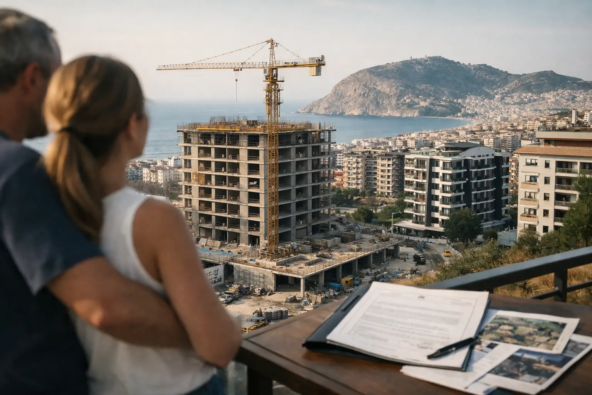
The devil is in the details. Some projects have a stronger marketing impact than they have in everyday life. Therefore, construction progress, specifications, division of ownership, shared costs, and future management should always be objectively examined. Those who buy solely based on visualizations may end up buying a picture instead of a tangible property.
When an existing property in Turkey makes more sense
An existing property is often the smarter choice when location is the key criterion. In many sought-after coastal locations, the best plots of land have long been developed. Those looking to buy near established town centers, well-maintained neighborhoods, or particularly desirable seaside locations will often find existing properties rather than new builds.
Another advantage is the ability to assess the property realistically. You can see the building, the neighborhood, the actual view, the noise level, and the condition of the common areas. There are fewer assumptions and more verifiable facts. For many security-conscious buyers, this is a compelling argument.
Existing properties can also offer price advantages if modernization potential exists and this is properly calculated. Buyers with a clear vision and professional guidance can thus acquire quality in a good location without paying the price of a comparable new build. However, this requires experience. A seemingly inexpensive existing apartment can quickly become more expensive than expected due to renovations, administrative issues, or unclear documentation.
Where to look closely at existing properties
When buying an existing property, it's not just the visual appearance and the price that matter. Crucial factors include the year of construction, the building's condition, any deferred maintenance, the ownership structure, the monthly service charges, the technical systems, and the completeness of all documents. It's also essential to clarify whether any alterations have been properly approved before signing the contract.
Buyers from the DACH region (Germany, Austria, and Switzerland) rightly expect transparency and streamlined processes. This expectation is justified. Anyone investing in an unfamiliar market shouldn't improvise. An existing property can be excellent, but only if its condition and legal status have been thoroughly and transparently assessed.
New construction or existing property in Türkiye – the most important differences for investors
Owner-occupiers and investors sometimes have different priorities. Those who intend to live in the property themselves or use it as a holiday home often place a higher value on comfort, amenities, service, and personal quality of life. For investors, alternative uses, resale value, running costs, and the quality of the location are more important.
New buildings often appear attractive to investors because they are modern and easily marketable. This can be true, especially in segments with a clearly defined target group. At the same time, economic viability doesn't depend solely on the year of construction. An older, well-located apartment in an established neighborhood can maintain a more stable demand in the long term than a new building in an area with uncertain development.
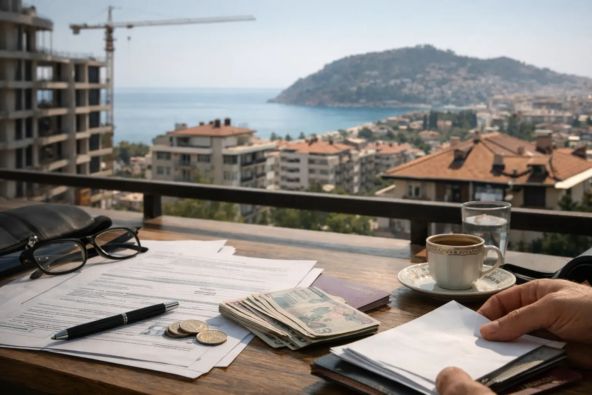
When considering costs, buyers should think beyond the purchase price. Additional purchase costs, potential upgrades, monthly maintenance fees, upkeep, and any necessary modernization should all be taken into account. Those who only compare the initial price often make the worse decision.
The most common misconceptions when comparing
A common assumption is that new buildings are always safer. This is too general. Safety doesn't arise from novelty, but from... Certified construction quality, complete documentation and a structured purchasing process.
It is equally wrong to assume that existing properties are always cheaper and therefore more economical. A low purchase price can be offset by renovations, technical defects, or poor management. The better property is not the cheaper one, but the one with the most harmonious balance of location, condition, documentation, and intended use.
Anyone comparing new construction or existing properties in Türkiye should analyze not only the purchase price but also the future marketability.
Emotional factors are also frequently misjudged. Some buyers choose new builds because everything is gleaming. Others prefer existing properties because they can immediately see what's there. Both are understandable, but neither replaces a thorough analysis.
How to make the right decision
The cleanest approach doesn't begin with the property itself, but with your profile. First, ask yourself: Is the property primarily intended for personal use, portfolio diversification, or future resale with good marketability? How important are sea views, proximity to the city center, peace and quiet, services, and minimal maintenance? What is a realistic budget available, including additional costs?
The next step is the property inspection. For new buildings, the project developer, construction quality, completion status, contract structure, and ongoing costs should be thoroughly analyzed. For existing properties, the focus is on the condition, legal status, modernization needs, and the actual quality of the location.
Especially in Alanya, it's often evident that the type of property alone doesn't determine quality, but rather the combination of location, standard, and intended use. A high-quality new build might be ideal for one buyer because comfort and minimal initial work are important. For another, a carefully vetted existing property is the better choice because it's located in a more established area and fits better strategically into their portfolio.
Anyone viewing the Turkish real estate market from a European perspective should not make decisions based on impressions, but rather on data, site visits, and legal due diligence. This is precisely the difference between a spontaneous purchase and a sound investment. Home World Alanya supports this process with German-speaking advice, local market knowledge, and a clear focus on transparency.
If you're wavering between a new build and an existing property, that's not a sign of uncertainty, but rather of professionalism. The better choice is the one that will still fit your strategy in three, five, or ten years. Answering this question carefully doesn't mean simply buying a property in Turkey; it means making a well-considered investment decision. For an initial assessment of your goals and criteria, a personal exchange via WhatsApp or contact form is often the most sensible next step.
Current market data is regularly published by the Turkish Statistical Institute. TÜİK Real Estate and Economic Data.